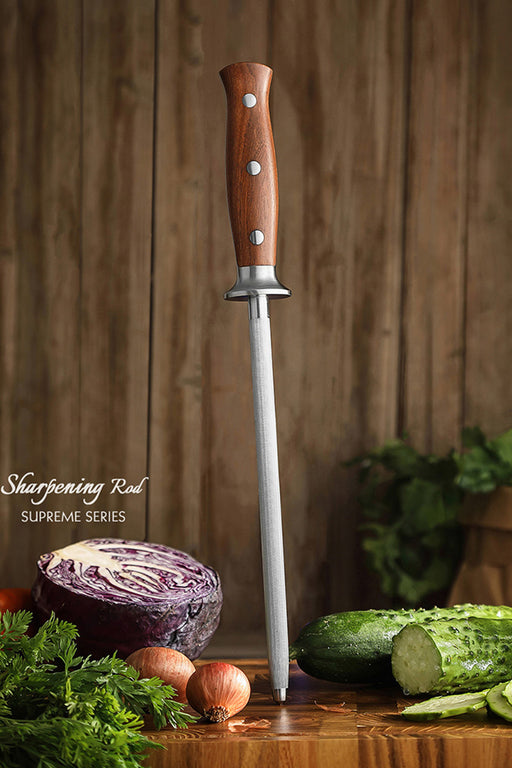
In any kitchen, maintaining the sharpness of knives is crucial for efficiency and safety. A honing rod, often mistaken for a sharpening tool, is designed to realign the edges of knives, ensuring they cut smoothly and precisely. Selecting the right honing rod can significantly impact your kitchen’s functionality, helping to prolong the life of your knives. This article provides insights into choosing the best knife hone rod, considering various factors that suit different kitchen needs.
Understanding the Purpose of a Hone Rod
A honing rod is essential for maintaining the edge of a knife between sharpenings. Unlike sharpening, which grinds away parts of the blade to create a new edge, honing simply realigns the existing edge. This process keeps knives in peak condition and reduces the frequency of sharpening, thus extending their lifespan.
Types of Honing Rods
When selecting a honing rod, consider the different types available, each offering unique benefits:
- Steel Rods: These traditional rods are highly effective for regular maintenance of the knife edge. They’re durable and provide a good balance of control and effectiveness.
- Ceramic Rods: Known for their gentle yet effective honing capabilities, ceramic rods are ideal for delicate blades and those that require a softer touch.
- Diamond Rods: Coated with diamond particles, these rods offer a more aggressive honing solution, perfect for harder knife materials.
Factors to Consider When Choosing a Hone Rod
The selection of an appropriate honing rod is influenced by several factors, ensuring it meets specific kitchen requirements:
Material Compatibility
It’s crucial to match the honing rod with the knife material. For example, ceramic rods are best for stainless steel knives, while diamond rods are suitable for harder alloys. Explore advanced guides and tips for more detailed insights into material compatibility.
Length and Size
The length of the honing rod should be compatible with the size of the knives in use. A rod that is too short may not sufficiently hone larger knives, while a longer rod offers more flexibility for a variety of knife sizes.
Grip and Handle Design
A comfortable, non-slip handle is vital for safe use, especially when honing requires a firm and controlled grip. Ergonomic designs help reduce hand fatigue during regular maintenance routines.
Maintaining Your Honing Rod
Regular maintenance of the honing rod itself is necessary to ensure it remains effective. Keep the rod clean by wiping it down after use to prevent metal particles from accumulating. Discover expert strategies here for maintaining the performance and longevity of your honing tools.
Storage Solutions
Proper storage is essential for preserving the integrity of both the rod and the knives. Consider wall-mounted racks or protective sheaths to keep the honing rod accessible and in good condition. Find out more about this approach to hone rod storage and care solutions.
Integrating a Honing Routine in Your Kitchen
Incorporating a regular honing routine into your kitchen practice enhances the performance and safety of your knives. Aim to hone knives before each use to ensure they are always at their best. Learn about our tailored solutions for integrating efficient honing practices into your culinary routine.
In conclusion, selecting the right honing rod is a critical decision that can enhance the efficiency and longevity of kitchen knives. By understanding the types of rods available, considering material compatibility, and implementing proper maintenance, chefs can maintain their tools in optimal condition. For further guidance on choosing the best honing rod for your kitchen, explore advanced guides and tips.